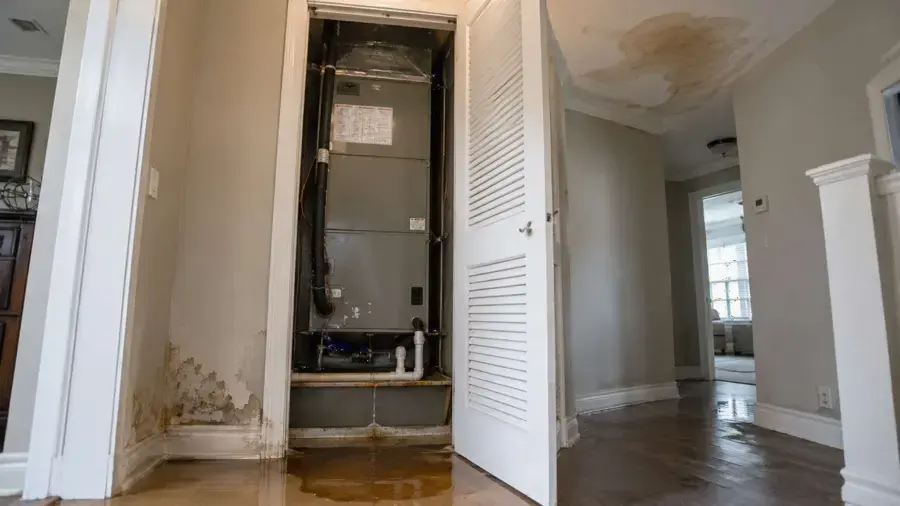
An air handler in a humid climate pulls a surprising amount of water out of the air, and that water has to go somewhere. In Naples homes and condos the air handler usually sits in an interior closet, a garage or the attic, and a small PVC condensate line carries the water outside or into a drain. When algae and sludge clog that line, the pan fills and overflows, and the water spreads quietly across tile, under baseboards and into the closet walls.
Why condensate leaks go unnoticed
- The flow is slow and steady, so there is no burst to hear
- Interior closets hide the first days of damage behind a door
- Attic air handlers leak into the ceiling below before anyone sees a drip
- In condo towers the water can travel down to the unit below first
- A float switch that should shut the system off may be missing or stuck
How the damage is handled
The mitigation team treats long-running condensate water as Category 2 in most cases, since it has sat in a pan with algae and dust. The tech who does the walkthrough maps moisture around the closet, the adjoining rooms and the ceiling below with thermal imaging and pinless meters. Wet baseboards and the lower drywall in the closet often come out, and the wall cavities are dried with air movers and an LGR dehumidifier. An HVAC technician clears the line and checks the float switch, which is a separate repair from the water damage itself.
Look for the early signs
A musty closet, a stain on the ceiling below an attic unit, a warm house with the AC running, or water in the secondary pan are all worth a look before the next heavy cooling day.
Keeping it from happening again
Most HVAC service plans in Southwest Florida include clearing the condensate line, and a float switch that shuts the system down when the pan fills is a cheap safeguard. The Department of Energy covers basic air conditioner maintenance, and UF/IFAS Extension publishes Florida-specific guidance on humidity and moisture in homes.