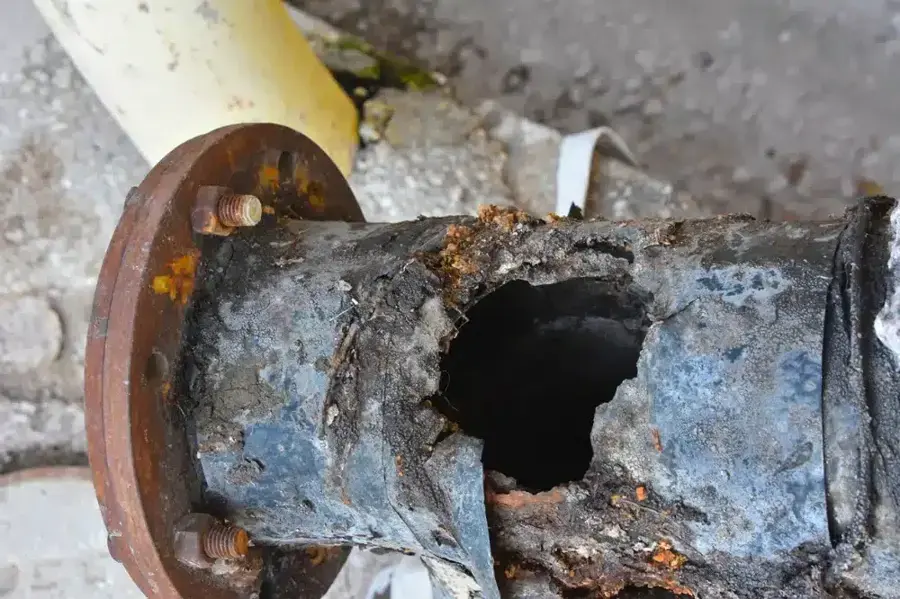
Much of Naples was built with cast iron drain pipe, from the historic cottages of Old Naples to the block homes of the 1960s and 1970s and many of the condo towers along the Gulf. Florida's warm ground and the gases inside drain lines corrode cast iron from the inside out. Over decades the bottom of the pipe thins, cracks and channels, and roots can push into joints under the slab. The result is a slow leak of wastewater into a wall, a cabinet base or the soil under the floor.
How a failing cast iron drain shows up
- Slow drains and repeated backups in tubs, showers or kitchen sinks
- Sewer odor in a bathroom or closet with no visible leak
- Stains or damp drywall along a wall that holds a drain stack
- Wet flooring near a toilet or tub on a slab
- In condos, water stains in the unit below a bathroom stack
Why this is not a clean-water job
Water leaking from a drain line is gray or black water, depending on what the line carries. The mitigation team treats it that way: containment to keep the rest of the home clean, removal of wet drywall, insulation and baseboards around the leak, cleaning of hard surfaces, and an EPA-registered antimicrobial before structural drying begins. Porous materials touched by Category 3 water are removed, not dried. The sewage cleanup guide covers the full Category 3 protocol.
Pipe repair is a separate trade
A plumber camera-inspects the line and decides on a spot repair, a lining or a full replacement. Drying and sanitizing the damage is a restoration job, and the two are often scheduled together.
Cast iron in Naples condo buildings
In towers, drain stacks run through shared walls, so one failure can affect a column of units. Associations often camera-inspect stacks and plan replacement building-wide. Each affected unit still needs its own moisture map and drying log. The EPA indoor air quality pages explain why wastewater leaks need prompt cleanup, and the OSHA site covers protective equipment for sewage exposure.