24/7 emergency water damage restoration for Naples and Collier CountyDrying to the IICRC S500 standard
Water Damage Naples FLNaples · Collier County
Structural drying and dehumidification

Structural Drying & Dehumidification in Naples, FL

Structural drying, not just surface drying. In Gulf humidity the job is as much about pulling water out of the air as out of the walls, and it ends on a reading, not a date.

(888) 621-2041Get Naples structural drying started
  • 24/7 dispatch
  • IICRC S500 drying goal
  • Daily moisture readings
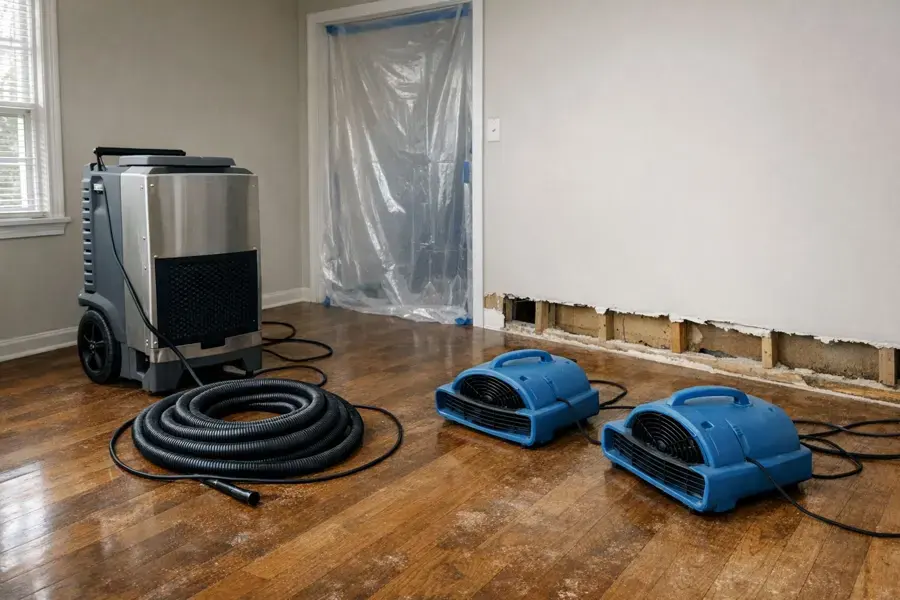
Dehumidifier and air movers drying a flood-cut Naples room behind containment
StandardIICRC S500
Main gearLGR dehumidifiers
GoalWithin 2 to 4 points of dry
RecordsDaily readings
First steps

What to do first about structural drying

These steps are safe for most people to take before help gets there. If the water touches outlets or smells of sewage, skip straight to the call.

  1. 1

    Close the house up

    Keep windows closed in humid weather so outdoor moisture stays out.

  2. 2

    Run the AC if safe

    Keep the AC running if the system and power are unaffected.

  3. 3

    Clear wet rooms

    Move furniture and rugs so air can reach walls and floors.

  4. 4

    Call for drying

    Get moisture mapped and equipment sized before damage sets in.

The standard

How structural drying is handled to standard

01

Rapid local response

Naples water damage pros answer day or night and ask which rooms are wet and whether the water is clean, gray or sewage.

02

IICRC S500 drying standard

IICRC S500 is the industry drying standard. The drying team pulls equipment only when the readings say dry.

03

Claim-ready documentation

Most crews log daily moisture readings, psychrometric data and timestamped photos, the file an adjuster reads.

04

Naples water experts

Cast iron stacks, slab leaks, air handler overflows and surge are everyday losses here, and local water damage experts plan for each.

Typical costs

What does structural drying cost in Naples, FL?

In Naples, FL, structural drying and dehumidification typically runs $1,500 to $9,000 or more, depending on the number of rooms, the class of loss, the materials involved and how many days of equipment the readings require.

One or two rooms

$1,500 to $3,000

  • Class 1 or 2
  • Air movers and one LGR unit
  • Three to five days

Several rooms

$3,000 to $6,000

  • Walls and cabinets
  • Multiple LGR units
  • Daily psychrometric logs

Dense materials or wide loss

$6,000 to $9,000+

  • Hardwood, plaster or slab
  • Desiccant dehumidification
  • Extended drying

Typical ranges, not a quote. For a planning number, try the water damage cost calculator.

The process

How structural drying is handled in Naples

The same four steps sit under every competent dry-out. What changes from job to job is the category of water and how much of the structure it reached.

  1. 1

    Map the moisture

    The tech who does the walkthrough finds the source and maps the wet area with thermal imaging and pinless meters.

  2. 2

    Extract

    The extraction crew pulls standing water, usually with truck-mounted extraction, before anything else goes down.

  3. 3

    Dry the structure

    Air movers run at each room's evaporation load while LGR dehumidifiers pull the moisture out of Gulf air.

  4. 4

    Verify and document

    Readings are logged daily until wet materials sit within 2 to 4 points of a dry reference, then the file is closed out.

The guide

Structural drying is the part of a water loss that decides whether problems come back. Drywall, framing, cabinets, block walls and slabs all absorb water, and they release it slowly. The goal under IICRC S500 is not a floor that looks dry; it is materials that read within 2 to 4 points of a dry reference material in an unaffected part of the same building. In Naples, humid outdoor air makes dehumidification the center of the job.

How the drying team sets up a Naples dry-out

  • Moisture mapping with thermal imaging and pinless meters before any equipment goes down
  • Class 1 through 4 decides how much equipment each room needs
  • Air movers set to the room's evaporation load, aimed along wet walls
  • LGR, low grain refrigerant, dehumidifiers sized to the air volume
  • Desiccant dehumidifiers for dense Class 4 materials like hardwood, plaster and concrete
  • Wall cavity and cabinet drying through small access holes or removed toe kicks

Why Naples humidity changes the plan

Evaporation depends on dry air. When the outdoor air is warm and humid, opening windows adds moisture rather than removing it, so crews keep the space closed and let dehumidifiers control it. If the power or the AC is out after a storm, generators and more dehumidification may be needed. Psychrometric readings, temperature, relative humidity and grains per pound, are taken with the material readings every day, and those logs become part of the claim file.

Equipment leaves on readings, not on a schedule

A contained Class 1 loss usually dries in three to five days; hardwood, plaster and slabs take longer. The drying team pulls equipment when the readings hit the goal.

Drying versus removal

Clean water damage is usually dried in place. Materials touched by Category 3 water, sewage or surge, are removed first, then the remaining structure is dried. For how water categories change the work, see the sewage cleanup and storm surge cleanup guides. The EPA moisture guide explains why materials should be dried within 24 to 48 hours, and UF/IFAS Extension covers humidity control in Florida homes.

Service area

Where structural drying calls come from in Naples

The Naples line covers the whole city, from Old Naples and Port Royal to Pelican Bay, North Naples, Golden Gate Estates, East Naples and Isles of Capri, plus Marco Island, Bonita Springs and Estero nearby.

Every neighborhood and ZIP covered
Questions

Structural Drying & Dehumidification questions, answered

Every answer here is general. The restoration contractor who responds confirms the details on the walkthrough.

Call the Naples restoration team
What is the difference between surface drying and structural drying?

Surface drying makes a floor look dry. Structural drying removes moisture from inside drywall, framing, cabinets, block and slabs until readings reach the drying goal.

Why not just open the windows?

In Naples the outdoor air is usually humid, so open windows bring more moisture in. Dehumidifiers in a closed space dry materials faster.

What do Class 1 through 4 mean?

The class describes how much water was absorbed and how hard materials are to dry, from a small area of low-porosity materials (Class 1) to dense materials like hardwood and concrete (Class 4). It decides how much equipment goes in.

What is an LGR dehumidifier?

Low grain refrigerant dehumidifiers pull more water out of the air than standard units, especially as the air gets drier. They are the workhorse of professional drying.

Why is the equipment so loud and warm?

Air movers and dehumidifiers run continuously and add heat, which actually helps evaporation. Crews balance temperature and humidity using daily readings.

When is drywall removed instead of dried?

When it has been touched by Category 3 water, has lost strength, or when insulation behind it is saturated. Otherwise cavity drying usually saves it.

Emergency line

Structural Drying & Dehumidification in Naples? Call now.

Standing water keeps moving into drywall, cabinets and the slab until someone pulls it out. One call starts the drying.

(888) 621-2041Speak with 24/7 dispatch for Naples

Coverage Naples and Collier County

Call (888) 621-2041Any hour