24/7 emergency water damage restoration for Naples and Collier CountyDrying to the IICRC S500 standard
Water Damage Naples FLNaples · Collier County
Condo and high-rise water damage

Condo & High-Rise Water Damage in Naples, FL

In a Gulf-front or bayfront tower, water rarely stays in one unit. It travels down through ceilings and walls, and the source is often a floor or two above.

(888) 621-2041Describe the condo leak to a pro
  • 24/7 dispatch
  • IICRC S500 drying goal
  • Daily moisture readings
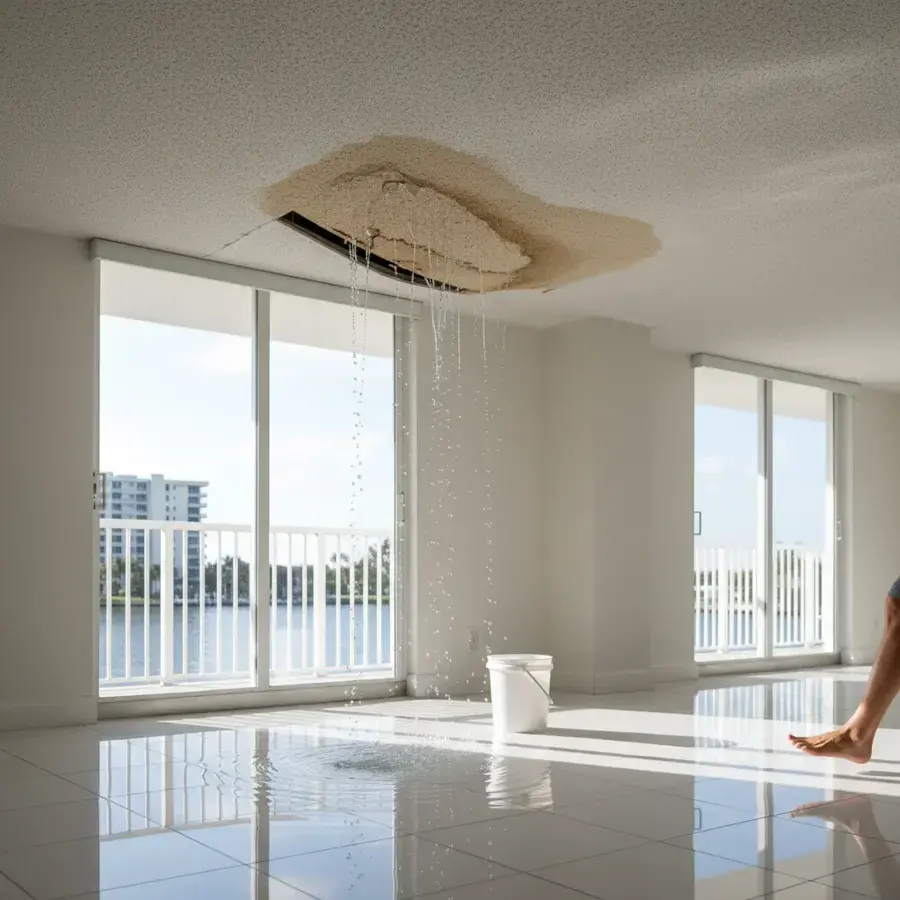
Water pouring through an opened ceiling into a waterfront Naples condo
Typical sourceThe unit above
Key taskTrace the source
DocumentationEvery affected unit
Drying goalIICRC S500
First steps

What to do first about condo water damage

These steps are safe for most people to take before help gets there. If the water touches outlets or smells of sewage, skip straight to the call.

  1. 1

    Shut the unit valve

    Close the water shutoff for the unit, and tell building staff if water keeps coming from above.

  2. 2

    Notify the association

    Report the leak to management so they can check the units above and below.

  3. 3

    Photograph both units

    Capture ceilings, walls, floors and the source if you can reach it.

  4. 4

    Call for mitigation

    Get extraction and drying started in every affected unit.

The standard

How condo water damage is handled to standard

01

Rapid local response

Naples water damage pros answer day or night and ask which rooms are wet and whether the water is clean, gray or sewage.

02

IICRC S500 drying standard

IICRC S500 is the industry drying standard. The drying team pulls equipment only when the readings say dry.

03

Claim-ready documentation

Most crews log daily moisture readings, psychrometric data and timestamped photos, the file an adjuster reads.

04

Naples water experts

Cast iron stacks, slab leaks, air handler overflows and surge are everyday losses here, and local water damage experts plan for each.

Typical costs

What does condo water damage cost in Naples, FL?

In Naples, FL, condo water damage mitigation typically runs $2,000 to $12,000 or more per loss, depending on how many units the water reached, the ceiling and wall materials, and whether the source was clean supply water or a drain.

One unit, clean water

$2,000 to $4,000

  • Floor and baseboards wet
  • Extraction and drying
  • Source documented

Two stacked units

$4,000 to $8,000

  • Ceiling drywall in the unit below
  • Walls opened where needed
  • Drying logs for each unit

Several units or a stack

$8,000 to $12,000+

  • Drain or riser failure
  • Category 2 or 3 handling
  • Coordination with management

Typical ranges, not a quote. For a planning number, try the water damage cost calculator.

The process

How condo water damage is handled in Naples

The same four steps sit under every competent dry-out. What changes from job to job is the category of water and how much of the structure it reached.

  1. 1

    Map the moisture

    The tech who does the walkthrough finds the source and maps the wet area with thermal imaging and pinless meters.

  2. 2

    Extract

    The extraction crew pulls standing water, usually with truck-mounted extraction, before anything else goes down.

  3. 3

    Dry the structure

    Air movers run at each room's evaporation load while LGR dehumidifiers pull the moisture out of Gulf air.

  4. 4

    Verify and document

    Readings are logged daily until wet materials sit within 2 to 4 points of a dry reference, then the file is closed out.

The guide

Naples has a large stock of condominium towers and mid-rises, from Park Shore and the Moorings to Pelican Bay and Vanderbilt Beach, many of them built in the 1970s and 1980s. Condo water damage is different from a house leak because the water crosses property lines. A failed supply line, a toilet overflow or an air handler leak in one unit can soak the ceiling, walls and floors of the units below, and a stack or riser failure can affect a whole column of the building.

Finding where the water came from

The first question every adjuster and association manager asks is where the water started. The tech who does the walkthrough traces it with moisture meters and thermal imaging, working up from the wettest point. Common sources include:

  • Supply lines to toilets, sinks, washers and ice makers in the unit above
  • Air handler condensate overflows in interior closets
  • Cast iron drain stacks and risers inside shared walls, covered on the cast iron pipe page
  • Balcony and window leaks during storms
  • Water heater failures in unit utility closets

How drying works in a condo tower

Concrete floor slabs and block walls hold moisture, and ceilings in the unit below are often the worst hit. The mitigation team extracts standing water, removes wet ceiling drywall and baseboards where needed, and sets air movers and LGR dehumidifiers in each affected unit. Access matters: building management, elevator bookings and neighbors all shape the schedule, and portable equipment replaces truck-mounted units on upper floors.

Tell the association early

Most condo documents require prompt notice of water damage. The association may need to shut a riser, open a shared wall or contact other owners.

Master policy, HO-6 and the claim file

In Florida condominiums, coverage usually splits between the association's master policy and each owner's HO-6 policy, and the declaration draws the line. A clean file for each unit, with the source documented, a moisture map, timestamped photos before any removal and daily drying logs, is what keeps a multi-unit claim moving. The FEMA flood insurance pages cover flood coverage for condo buildings, and the FloodSmart site explains unit-owner options.

Service area

Where condo water damage calls come from in Naples

The Naples line covers the whole city, from Old Naples and Port Royal to Pelican Bay, North Naples, Golden Gate Estates, East Naples and Isles of Capri, plus Marco Island, Bonita Springs and Estero nearby.

Every neighborhood and ZIP covered
Questions

Condo & High-Rise Water Damage questions, answered

Every answer here is general. The restoration contractor who responds confirms the details on the walkthrough.

Call the Naples restoration team
Who is responsible when the unit above leaks into mine?

It depends on the source, the condo declaration and Florida condominium law. In general the association's master policy covers parts of the building and each owner's HO-6 covers interior finishes and belongings. The documented source of the water drives the answer.

Can drying start before the adjusters visit?

Yes. Policies generally expect prompt steps to limit damage. Photograph everything, then let mitigation start. The drying logs and photos become part of the file adjusters review.

Why is my ceiling wet when there is no leak in my unit?

Water from the unit above, a shared wall, a riser or a balcony above can run along the slab and show up in your ceiling. Tracing it with meters and thermal imaging usually finds the path.

Does the ceiling drywall have to come out?

Sagging or saturated ceiling drywall usually comes down for safety and drying. Lightly wet ceilings can sometimes be dried in place with the right equipment and daily readings.

How long does condo drying take?

A single unit with clean water often dries in three to five days. Stacked units, concrete that took on a lot of water, or a contaminated drain source take longer, and each unit dries on its own readings.

Can the restoration crew work around building rules?

Yes. Crews routinely work within association rules on hours, elevator use and equipment noise, and the plan is set with building management.

Emergency line

Condo & High-Rise Water Damage in Naples? Call now.

Standing water keeps moving into drywall, cabinets and the slab until someone pulls it out. One call starts the drying.

(888) 621-2041Speak with 24/7 dispatch for Naples

Coverage Naples and Collier County

Call (888) 621-2041Any hour