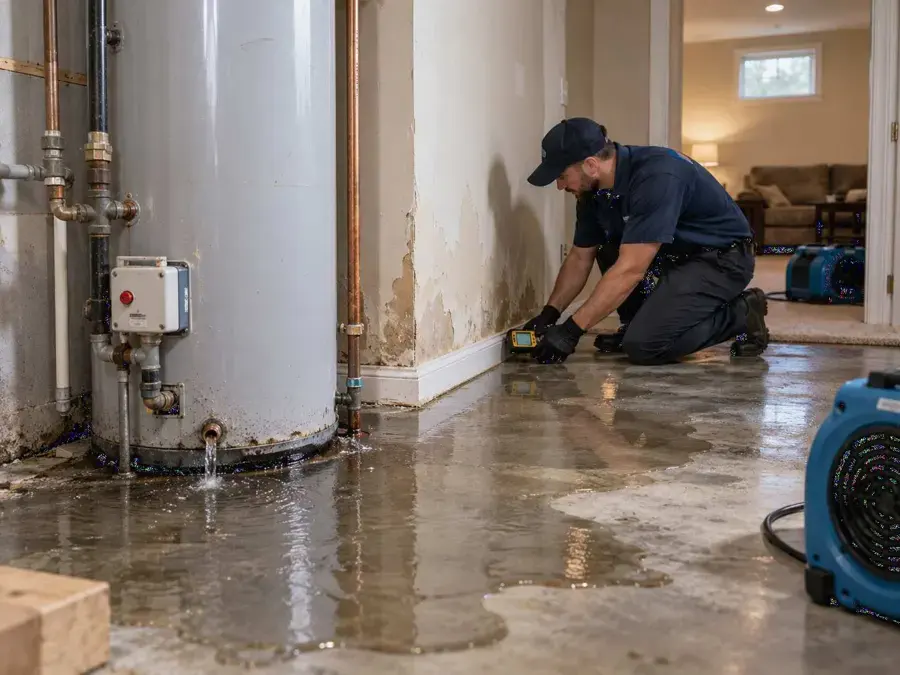
Water heaters in Naples live in garages, interior utility closets and, in many condos, a small closet next to the air handler. Tanks corrode from the inside, and the typical service life is roughly 8 to 12 years. Failures range from a slow drip at the drain valve or the temperature and pressure relief line to a sudden rupture of the tank itself. Because the tank refills from the supply, a rupture can keep running until someone closes the cold water valve.
How water heater leaks spread in Naples homes
- Garage tanks flood the slab and run under the door into the house
- Interior closet tanks soak the closet walls and the flooring in the next room
- Condo closet tanks can leak into the unit below through the slab
- Attic tanks send water straight into the ceiling, covered on the ceiling leak page
- A missing or dry drain pan lets small leaks spread unnoticed
What the drying team does
Tank water is clean water at first, so fast extraction lets most of the structure be dried in place. The tech who does the walkthrough maps the moisture around the closet or garage wall, checks baseboards and cabinet bases, and looks at the ceiling below when the tank sits upstairs or in a condo. Wet baseboards come off, small holes at the base of the wall let air movers dry the cavity, and an LGR dehumidifier pulls moisture out of the room air. A plumber replaces the tank; the drying runs alongside it.
Shut off power or gas first
Turn off the breaker for an electric heater, or set a gas heater to off, before closing the cold water valve. Let a hot tank cool before touching fittings.
Preventing the next one
A drain pan piped to the outside, a water leak sensor on the floor and a look at the tank's age during routine maintenance prevent most surprise floods. The Department of Energy water heating guide covers maintenance and replacement, and the Consumer Product Safety Commission posts appliance safety notices. For the extraction step, see the water extraction guide.