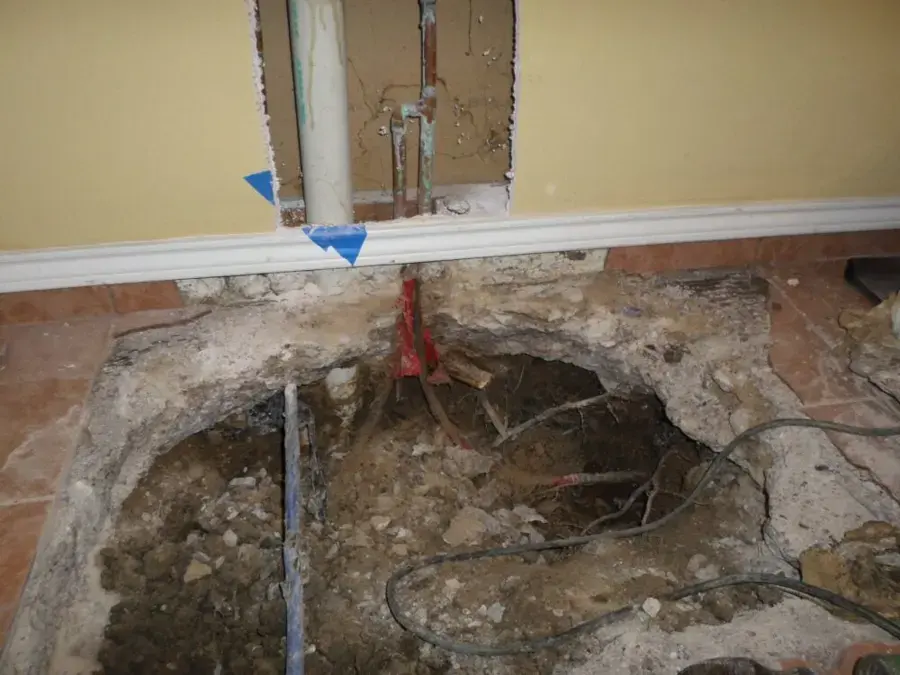
Slab-on-grade construction is the Naples norm. Copper or PEX supply lines often run under or through the slab to the kitchen and bathrooms, and over time copper can pinhole from water chemistry, abrasion against concrete or shifting soil. A slab leak rarely announces itself with a flood. It shows up as a warm spot on the tile from a hot water line, damp grout lines, a baseboard that swells, a water bill that jumps or the sound of running water with every tap closed.
Signs of a slab leak in a Naples home
- Warm or damp areas on tile or terrazzo floors
- Grout that stays dark or cracked tiles that were not there before
- Wet or swollen baseboards and the bottom edge of drywall
- A water meter that keeps moving with every fixture off
- Musty smells from a closet or a room with no visible leak
Two trades, one job
A slab leak needs a plumber to find and fix the line, and a restoration crew to deal with the water it left behind. Leak detection uses acoustic and thermal tools, and the repair may be a spot repair through the slab or a reroute through the walls or attic. The mitigation team handles the other half: moisture mapping around the leak, removal of wet baseboards and any lifted flooring, and drying the slab and wall bases with air movers and LGR dehumidifiers. The plumber and the drying team often work the same days.
Why slabs take longer to dry
Concrete holds water deep in the slab. Surface readings can look fine while the slab below still reads wet, so crews verify against a dry reference in an unaffected room before pulling equipment.
Flooring decisions after a slab leak
Tile set directly on the slab often stays in place if it is still firmly set, while laminate, engineered wood and carpet over a wet slab usually come up so the concrete can dry. The EPA WaterSense program explains how to check a water meter for hidden leaks, and UF/IFAS Extension covers moisture control in Florida homes. Related pipe failures are covered on the burst pipe page.