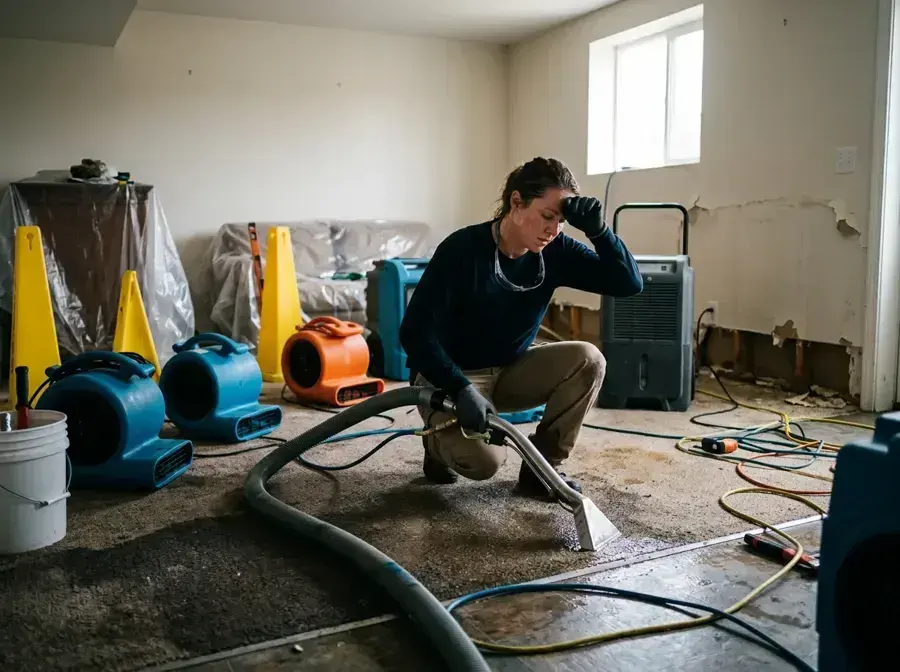
Extraction is the least glamorous part of a dry-out and the part that decides how the rest goes. A room with standing water cannot be dried with fans; the water has to leave the building first. In Naples that usually means water sitting on tile or terrazzo over a concrete slab, soaking into baseboards and the bottom edge of the drywall, or saturating carpet and pad in a bedroom or a condo living room.
How water extraction works in a Naples home
The extraction crew starts at the source and works out, so clean water does not get pushed into dry rooms. Most crews run:
- Truck-mounted extraction, which pulls far more water than a shop vacuum and sends it out of the house instead of into a tank that has to be carried through the rooms
- Portable extractors and weighted wands for condo units where a truck cannot reach the floor
- Squeegee wands on tile and terrazzo, and hardwood floor mats that pull water up out of the boards
- Moisture meters to find where the water went under cabinets, walls and door jambs
Once the free water is gone, the drying team sets air movers and dehumidifiers sized to the room. That handoff is covered on the structural drying page.
Why fast extraction matters in Florida humidity
Water on a slab has nowhere to drain, so it spreads sideways until it finds something porous. In Naples the air already carries a lot of moisture, which slows natural evaporation and gives mold its 24 to 48 hour window. Extraction removes the bulk of the water so dehumidifiers can deal with what soaked in, rather than trying to evaporate a whole floor of standing water through humid air.
What extraction cannot fix
Extraction removes water; it does not dry the wall cavity, the cabinet base or the slab. Equipment stays until the readings say dry, not until the floor looks dry.
What the extraction crew checks before starting
The tech who does the walkthrough confirms the category of water first. Clean water from a supply line is extracted and dried in place. Gray water from a washer or a condensate pan gets extra cleaning. Anything from a sewer line or storm surge is Category 3, which changes the job to containment and removal, as the sewage cleanup guide explains. For general flood safety before anyone starts, Ready.gov keeps a clear checklist, and the EPA moisture guide explains why drying within a day or two matters.