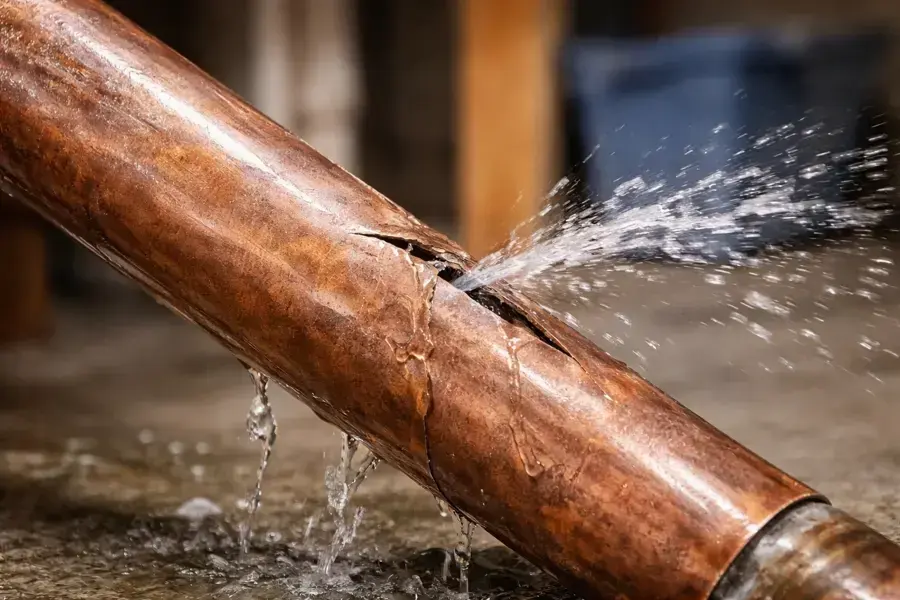
Naples does not get the hard freezes that split pipes up north, but supply lines still burst. Pressure spikes, corroded copper, failed fittings and compression joints, polybutylene lines in homes built roughly 1978 to 1995, and lines damaged during remodels all fail without warning. Because the line is pressurized, the water keeps coming until someone closes a valve.
Common burst pipe sources in Naples homes
- Pinholed or split copper supply lines in walls and ceilings
- Polybutylene supply lines and their fittings in older homes
- Failed shutoff valves and braided lines under sinks and toilets
- Hose bibs and irrigation connections that leak back into the wall
- Lines nicked by nails or screws during renovations
How burst pipe water is handled
Water from a supply line starts as Category 1, clean water, which means most of the structure can be dried in place if the work starts quickly. The extraction crew pulls standing water first, then the tech who does the walkthrough maps where it went: under cabinets, into wall cavities, down into the ceiling below. Air movers and LGR dehumidifiers go in sized to each room, with baseboards removed or small holes drilled at the base of the wall so the cavity dries. If the water sits for a couple of days in Naples heat, it can degrade toward Category 2, and more material has to come out.
Know your shutoff
The main valve is often near the street or on an exterior wall, and condo units usually have a unit shutoff in a closet or utility room. Finding it before an emergency saves a lot of drywall.
The plumbing repair and the claim
A plumber repairs the failed section, and the drying runs alongside it. Sudden and accidental discharge from a burst line is the classic covered water loss on many policies, and a file with a moisture map, timestamped photos and daily readings supports it. The EPA WaterSense program has leak-finding tips, and Ready.gov covers electrical safety around water. For the extraction step in detail, see the water extraction guide.