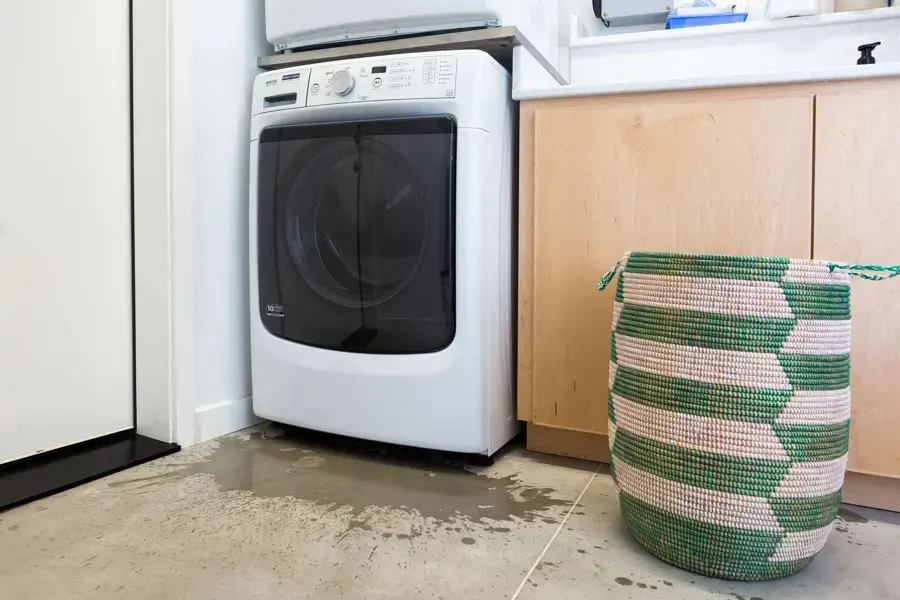
Appliance lines are a leading cause of water claims, and Naples adds a twist: many homes and condos sit empty for part of the year while owners are away. A pinhole in a refrigerator line or a washer hose that bursts while no one is home can run for days. Kitchens take the worst of it, because water slips under the cabinet toe kicks, soaks the cabinet bases and spreads under tile or into the wall behind.
Typical appliance leak sources
- Rubber washing machine supply hoses that crack with age
- Plastic or copper refrigerator ice maker and water dispenser lines
- Dishwasher supply lines, drain hoses and door seals
- Washer drain hoses that pop out of the standpipe
- Failed shutoff valves behind appliances
Drying cabinets and floors after an appliance leak
The extraction crew pulls water from the floor and from under appliances first. The tech who does the walkthrough then checks cabinet bases, toe kicks and the walls behind the appliance with moisture meters. Toe kicks often come off so air can reach the cavity under the cabinets, and drying mats or injection drying may be used on cabinet bases and wall cavities. Washer drain water is gray water, Category 2, so soaked porous materials there are cleaned or removed rather than simply dried. For the drying process in detail, see the structural drying guide.
Seasonal homes need a plan
Closing the main valve before leaving for the season, or installing an automatic shutoff with leak sensors, prevents most long-running appliance floods.
Prevention that actually works
Braided stainless washer hoses, a leak sensor behind the refrigerator and dishwasher, and a periodic look under the kitchen sink catch most problems early. The EPA WaterSense program has practical leak checks, and the Consumer Product Safety Commission tracks appliance recalls.