Tile roofs are everywhere in Naples, along with shingle and standing-seam metal. Concrete and clay tile shed most rain, but the waterproofing is the underlayment beneath the tiles, and that layer ages in the Florida sun. When it fails, or when flashing at a wall, chimney or skylight lets go, water gets under the tile and into the attic. Summer thunderstorms and hurricane-driven rain find those weak points quickly.
Roof leak sources on Naples homes
- Aged or torn underlayment under concrete and clay tile
- Cracked or displaced tiles after storms
- Flashing at walls, valleys, chimneys, skylights and vents
- Roof-mounted equipment and solar penetrations
- Wind damage from hurricanes and tropical storms
From the attic to the ceiling
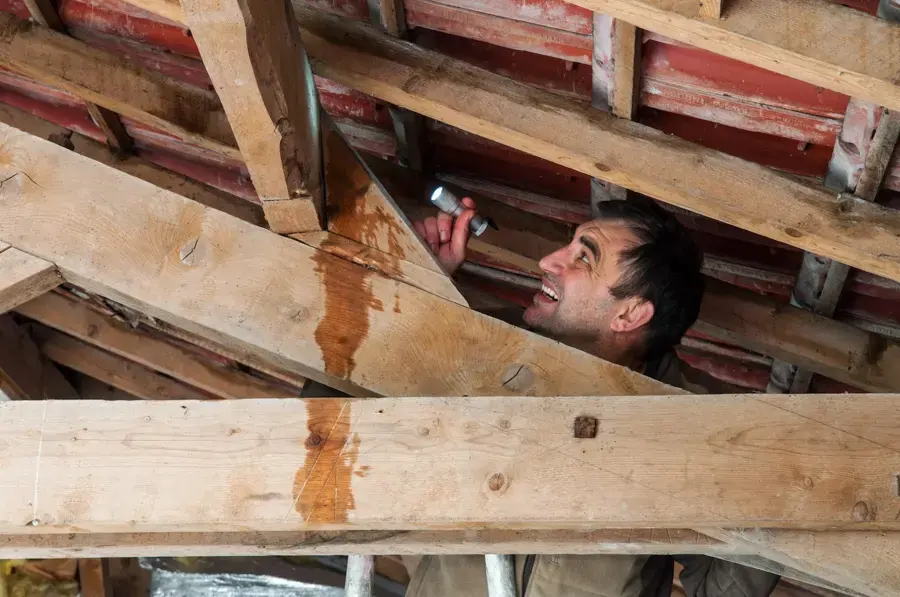
Water through a roof lands on the attic insulation first. Blown insulation acts like a sponge, holding water against the ceiling drywall until the drywall stains, sags or fails. The tech who does the walkthrough checks the attic and the ceiling below with moisture meters and thermal imaging. Wet insulation usually comes out, sagging ceiling drywall is removed for safety, and the framing and remaining drywall are dried with air movers and dehumidifiers. The ceiling leak guide covers leaks that start inside the house instead.
Stop the water first
No drying plan works while the roof is still letting water in. Temporary protection, a tarp or a roofer's patch, comes first, then the dry-out.
Roof repair, drying and the claim
A roofer repairs or replaces the roof, while the restoration crew dries the interior. After a named storm, insurers look closely at whether the roof was damaged by wind or failed from age, so photos of the roof, the attic and every stained ceiling help the file. Ready.gov covers storm preparation for roofs and openings, and Collier County posts local storm and shelter updates. For wind-driven rain through walls and windows, see the hurricane rain damage guide.