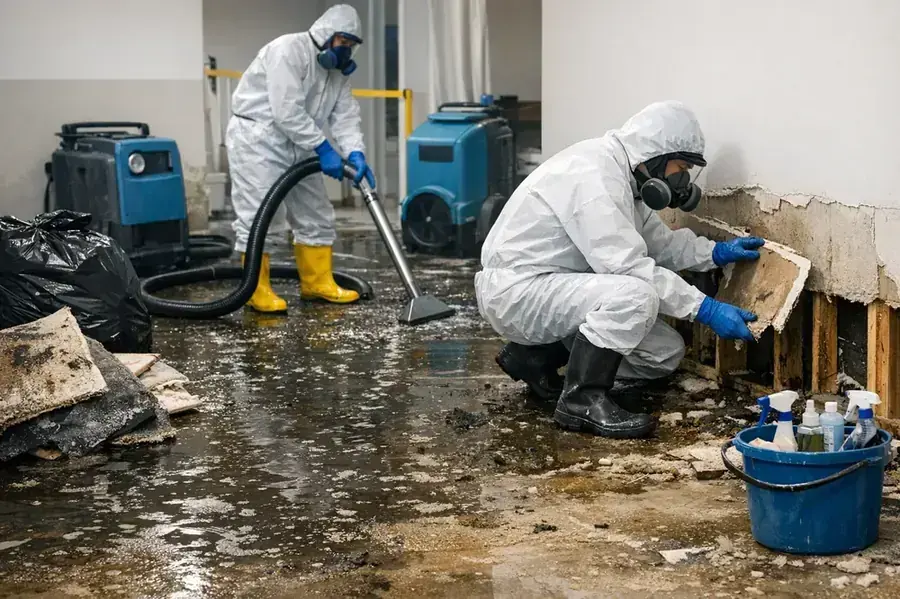
A sewage backup is the most hazardous water loss a home can have. In Naples it shows up as a toilet, tub or shower drain overflowing on a slab floor, a cast iron drain leaking into a wall, or, out in Golden Gate Estates, a septic system backing up after heavy summer rain. Storm surge that overwhelms sewer lift stations can also push sewage into low-lying homes.
Why sewage in Naples homes backs up
- Corroded or root-blocked cast iron drains under older slabs
- Grease and wipes blocking the main line
- Septic tanks and drain fields flooded by rain and high groundwater in the Estates
- Municipal lift stations overwhelmed during storms and power outages
- Condo stack blockages that back up into lower units
The Category 3 protocol
Porous materials touched by Category 3 water get removed, not dried. The mitigation team follows a strict order:
- Containment with plastic barriers and negative air through HEPA air scrubbers
- Crew protection: respirators, gloves, boots and disposable suits
- Extraction of the sewage, then removal of carpet, pad, baseboards, insulation and drywall at least 2 feet above the water line
- Cleaning of hard surfaces and an EPA-registered antimicrobial applied at its labeled dwell time
- Structural drying and verification before the containment comes down
Do not clean it yourself
Household cleaners do not neutralize sewage pathogens, and disturbing it spreads contamination. Keep children, pets and anyone with a weak immune system away.
Health and safety guidance
The CDC publishes guidance on the health risks of floodwater and sewage, and OSHA covers the protective equipment that sewage work requires. Drain line failures that cause backups are covered on the cast iron pipe page, and surge-driven sewage on the storm surge cleanup page.